

Critical Reflection
Discover the vital concept of Critical Reflection in nursing.


This has been created to comprehensively explain the significance of Critical Reflection in the field of nursing and how it influences nursing practice and reflective writing. It also includes practical tips, strategies, and real-life examples. You'll also learn how to handle the challenges of reflective practice, which is a valuable skill for your nursing career.
Understanding the Concept: What is Critical Reflection
Understanding key concepts is crucial for success in nursing. One of these is Critical Reflection. Tuning into our inner thoughts, emotions, and behaviours allows us to gain insights from our experiences and grow personally and professionally. This understanding is not just important; it's fascinating and engaging, as it opens up a world of self-discovery and continuous improvement.
Importance and Role of Critical Reflection in Nursing
In nursing, Critical Reflection is critical.
It helps with problem-solving by encouraging you to think about possible outcomes before taking action.
It also enables you to learn throughout your career by identifying areas where you can grow.
Reflecting on past actions can help improve patient care by showing you areas needing improvement.
Embracing Critical Reflection helps nursing professionals understand their strengths and areas for improvement so they can keep getting better at their jobs.
Concept of Critical Self-Reflection in Nursing
Engaging in critical self-reflection allows nurses to analyze their thoughts, emotions, and behaviours carefully. This practice supports their professional development and enhances their ability to connect with and comprehend their patients' experiences.
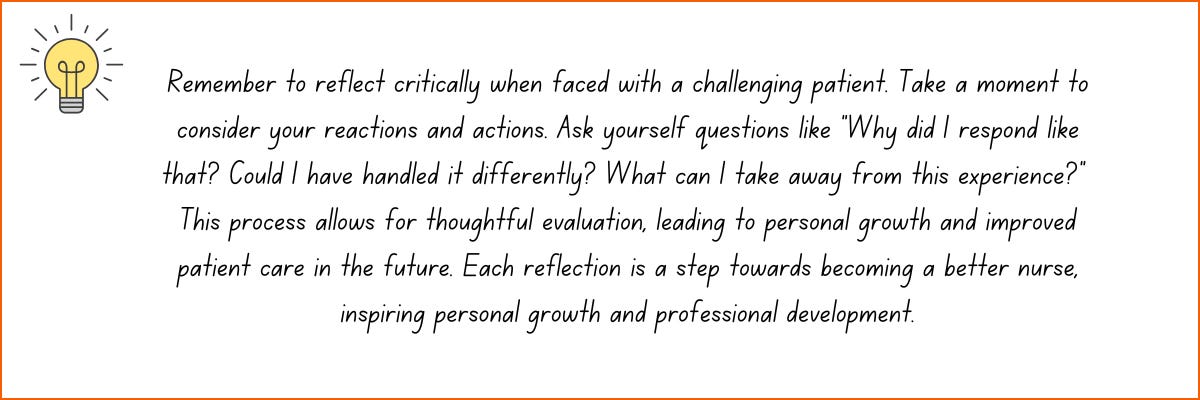
The process of Critical Reflection
Understanding Critical Reflection can help you follow a structured process. This process involves a series of steps:
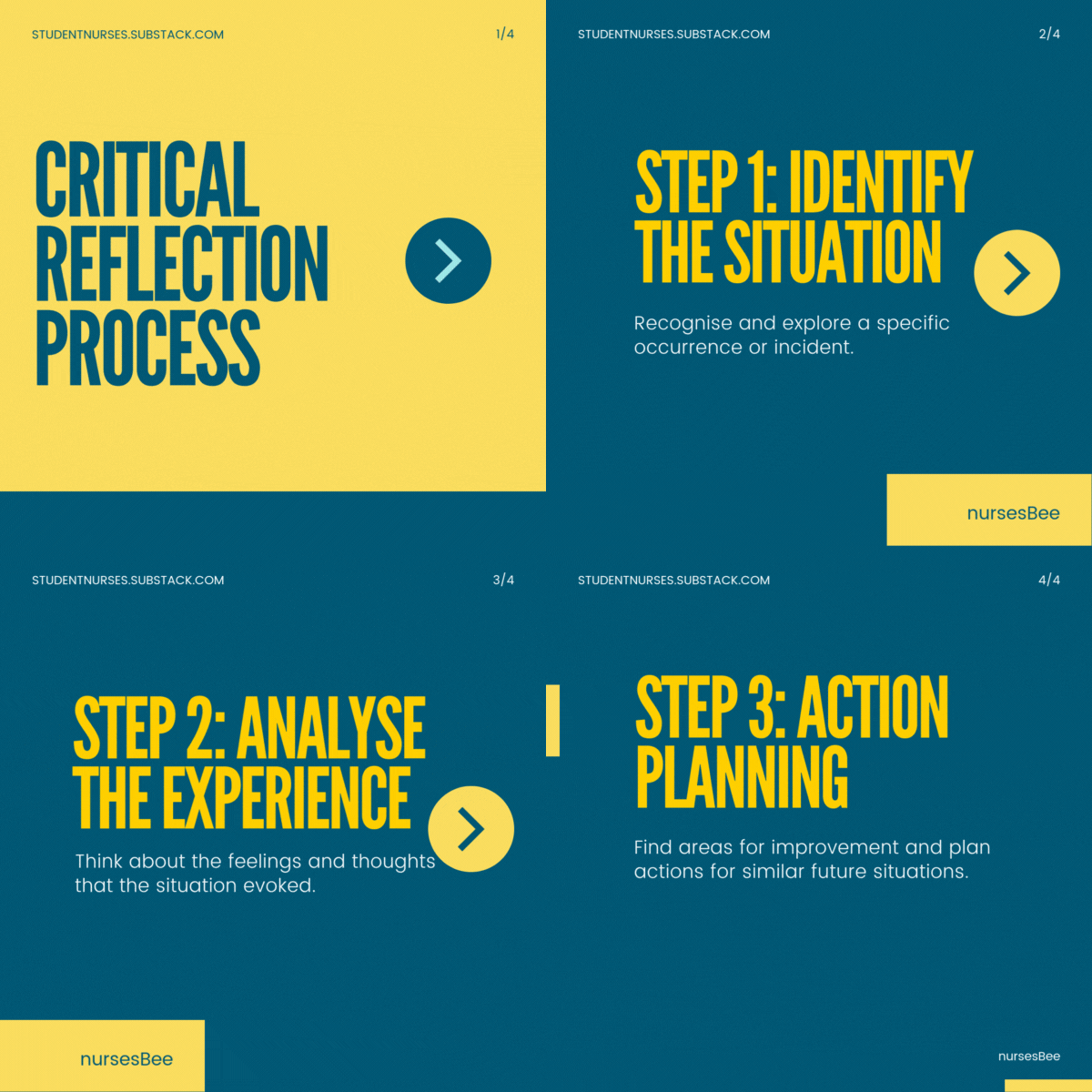
Step 1: Identify the Situation - Recognise and explore a specific occurrence or incident.
Step 2: Analyse the Experience—Think about the feelings and thoughts that the situation evoked.
Step 3: Action Planning - Find areas for improvement and plan actions for similar future situations.
In order to continue growing, it's crucial to thoughtfully ponder your experiences, learn valuable lessons from them, and continuously improve your skills.
Elaborating on the Critical Reflection Essay
Practising Critical Reflection in nursing involves writing a Critical Reflection Essay. This type of academic writing helps nursing professionals assess and analyse their experiences to gain insights and promote personal growth.
Structure and Components of a Critical Reflection Essay
A well-structured Critical Reflection Essay shows your understanding of the material and your ability to analyse your thoughts and experiences. Here are the essential components of a Critical Reflection Essay:
Introduction
In the opening section, you describe the subject of your reflection. This might involve a particular incident, an interaction with a patient, or an experience that prompted you to start reflecting. For instance, it could revolve around a complex case that presented unusual difficulties.
Body
The main part of the essay involves conducting a thorough analysis. In this section, it's important to carefully examine the event or experience, your reactions to it, how it affected you, and the insights gained. It's essential to highlight what you've discovered about yourself as a nurse or patient care.
Conclusion
The conclusion is where you bring together the results of your Critical Reflection. Here, you explain how your experience has affected your professional growth and how it will guide your future actions.
Incorporating Nursing Reflective Practice in Your Essay
Reflective practice is important in nursing because it helps with learning and improves patient care. When you use reflective practice in your essay, you must carefully think about your thoughts, feelings, and actions to learn from them.
If you encounter a challenging situation where a patient does not respond well to a prescribed treatment, you should think about your thoughts and reactions during the event instead of just talking about what happened. You would also explain how this experience helped you better understand patient care and reactions.
Difference between Informal and Formal Reflective Writing
In the field of nursing, reflective writing takes on both formal and informal forms. The informal variety, such as personal journal entries or diary writing, is more personal and lacks a specific structure. In contrast, formal reflective writing, like a Critical Reflection Essay, follows a more academic and organized format. Informal and formal reflective writing plays a crucial role in helping nursing professionals develop and continuously engage in lifelong learning.
Practical Aspects: Critical Reflection in Nursing
Let's move from theory to practice and explore Critical Reflection in nursing. This section includes a reflective practice schema, practical examples, and tips for implementing Critical Reflection during clinical placement. These practical aspects will help you become a reflective practitioner and improve your nursing practice.
Making the Most out of the Gibbs Reflective Cycle in Nursing
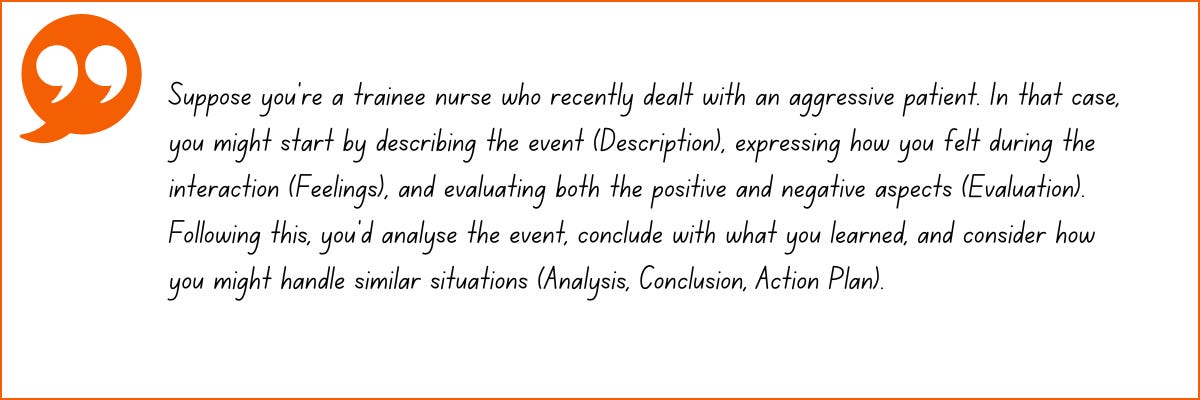
The Gibbs Reflective Cycle, developed by Graham Gibbs in 1988, is a widely used framework for organized reflection. It prompts individuals to consider the different phases of an experience or activity methodically. The cycle encompasses the following key stages:
Description: Detail the event you're reflecting on, sticking to the facts.
Feelings: Express your thoughts and feelings during the event to understand your emotional response.
Evaluation: Assess the experience, considering its good and evil.
Analysis: Examine the situation to make sense of the event.
Conclusion: Conclude what you learned and what you could have done differently after analysing the situation.
Action Plan: Develop a plan for how to deal with similar situations in the future.
Practical Examples of Reflective Writing in Nursing
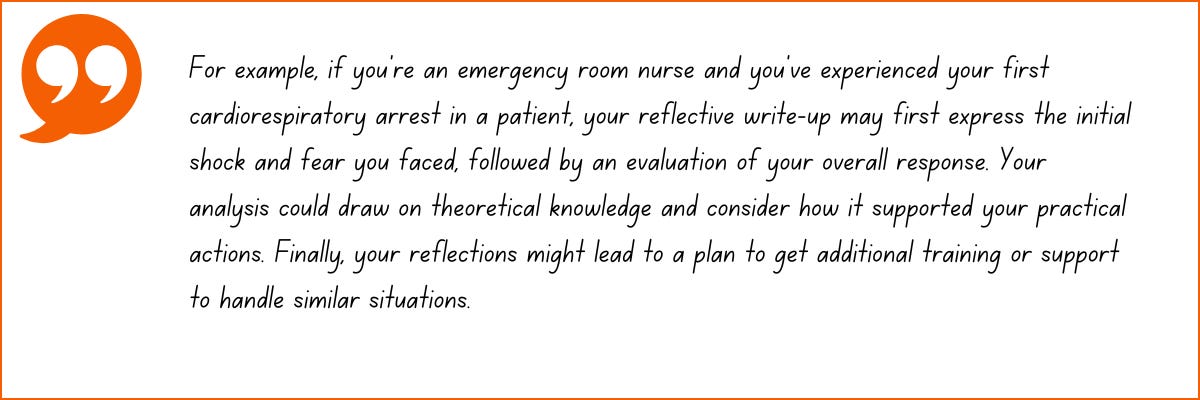
Good reflective writing can be more accessible when one looks at practical examples. While the content will be unique for everyone, certain structural features should be focused on. It would help if you were authentic, reflected on your thoughts, and showed a clear progression from describing an experience to analysing it.
Tips for Implementing Critical Reflection During Clinical Placement
Remember to include reflection in your practice to make it more effective. Here are some tips for integrating Critical Reflection into your clinical placements:
Start by thinking about real experiences and writing down your thoughts, feelings, and lessons learned from these events.
Be open and honest in your reflections. Avoid judging yourself to make the reflection process more productive.
Schedule regular time for reflection to make it a routine part of your professional practice.
Structure your reflections using a reflective model like the Gibbs Reflective Cycle.
Always connect theory with practice. This connection enhances learning and promotes using theoretical knowledge in practical ways.
Remember that reflection is not just about finding areas for improvement. It's also important to recognise what you did well. Balancing both aspects can lead to the best personal and professional development.
The Art of Mastering Your Nursing Reflective Practice
Having a firm grasp of your nursing reflective practice is essential. It is an art that requires essential skills. Reflective practice is crucial for continual learning and improvement in your nursing career.
The Relationship Between Critical Reflection and Clinical Placement
The relationship between critical reflection and clinical placements is intricate. Clinical placements allow nursing students to apply their knowledge in real-life settings, often serving as their first taste of actual nursing practice. These placements provide students with opportunities to merge nursing theory and practice by exposing them to a range of patient cases, each with its own set of challenges and learning opportunities.
Critical reflection plays a crucial role in this setting. It enables students to pause, assess, and derive lessons from each experience, bridging the gap between theory and practice and fostering continuous improvement.
The Role of Reflective Writing in Nurturing Critical Thinking Skills
Reflective writing plays a crucial role in nurturing critical thinking skills in nursing. It acts as a bridge between theoretical knowledge and its practical application, aiding in developing essential abilities.
In nursing, critical thinking involves logical reasoning and the ability to make well-informed decisions, particularly in high-pressure scenarios. It is a fundamental clinical judgment component and indispensable for delivering high-quality patient care.
Strategies for Effective Reflective Writing in Nursing
Reflective writing can help improve your nursing skills when done well. Here are some strategies to consider:
Make it a Habit: Set aside regular time for reflective writing to gain deeper insights and understand complex experiences.
Think About Structure: Use a reflection model, like Gibbs' or Kolb's, to guide your thoughts in a structured way.
Be Honest: Don't hesitate to write about your feelings, thoughts, and events exactly as they happened – reflective writing is for your benefit.
Link Theory and Practice: Connect what you study with your clinical practice experience to strengthen your understanding of nursing concepts.
Follow an Iterative Process: Revise and update your reflections as your knowledge grows.
Exploring the Challenges of Critical Reflection in Nursing
Critical Reflection is a crucial element of nursing practice, but it comes with challenges. Unpacking these challenges aids in effective reflective practice, thereby enabling you to harness its true potential in clinical settings. Some common complications can include difficulties in setting aside personal biases, dealing with emotionally challenging situations, applying theoretical models to real-life events, and maintaining an objective perspective.
Common Mistakes in Critical Reflective Practice and How to Avoid Them
Familiarising yourself with common mistakes in reflective practice can serve as a guideline to steer clear of these pitfalls. Here are several inaccuracies that often crop up, along with tips on how to stay clear of them:
Avoiding Emotionally Charged Events: Reflecting on emotional experiences is challenging, but it is in these instances that the most profound learning can occur. To sidestep this pitfall, view these occasions as opportunities for vital insight and professional growth.
Overemphasis on Negative Aspects: Though critical analysis often involves identifying areas of improvement, calibrating it with the recognition of successful outcomes is equally important. This balanced approach ensures a more holistic reflection.
Lack of Objectivity: Although self-reflection is inherently personal, maintaining objectivity is crucial. To achieve this, consider describing the event as a neutral third party before analysing your emotions and reactions.
Overcoming Obstacles in Applying Gibbs Reflective Cycle in Nursing
Implementing a structured reflection model like the Gibbs Reflective Cycle has its hurdles. Here are some ways to navigate these roadblocks effectively:
Difficulty in Recalling Feelings: It's common to remember how you felt during an event, especially as time passes. To help with this, try writing down your thoughts soon after the event while everything is fresh.
Problem in Connecting Stages: Make sure the stages of the Gibbs cycle are connected and informed by one another. If you're having trouble with this, go back to each stage and clearly show the connections.
Trouble in Formulating an Action Plan: Remember, action plans don't need significant changes. Small changes or insights are just as valuable. If you're stuck, talk to peers or mentors about your thoughts.
When utilised effectively, the Gibbs Reflective Cycle offers a framework that promotes a deeper understanding of your experiences, emotions, and thoughts. It effectively bridges the gap between theory and practice. Remember that proficiency comes with practice, so don't be discouraged by early obstacles.
Tips for Dealing with Difficult Situations during Critical Self-Reflection
Dealing with tough situations can be a chance to learn and grow. Here are some ways to handle these moments of self-reflection:
Be honest about your feelings, thoughts, and actions without blaming or criticising yourself.
Seek emotional support and professional guidance from people you trust when facing challenging reflections.
It's essential to keep patient information private when discussing reflections.
Reflecting on difficult situations can be tiring. Take care of yourself by doing things that help you relax and feel well.
Critical Reflection - Key Takeaways
Reflecting critically in nursing involves evaluating and analysing experiences to gain insights and promote personal growth.
A Critical Reflection Essay is a specific type of academic writing commonly used in nursing. It includes an introduction, body, and conclusion.
In nursing, both informal reflective writing and formal reflective writing are used. Informal writing is more personal and has no specific format, while formal writing is more structured and academic.
The Gibbs Reflective Cycle is a model for structured reflection in nursing. It includes stages for description, feelings, evaluation, analysis, conclusion, and action plan.
Critical reflection during clinical placements allows students to evaluate and learn from their experiences, linking theory to actual nursing practice.